Peripheral Vascular Examination

Subject summary

As with many examination stations, a peripheral vascular examination follows the usual trend. For this case, this is Look, Feel, Listen (or Inspect, Palpate, Auscultate).

  1. Ensure that your patient is lying comfortably on the bed. Ideally they should be exposed from the abdomen down, however, for the purposes of an exam, the patient will probably be wearing shorts.

  2. Initially you should perform a general observation of the patient, noting whether they are comfortable at rest as well as their general wellbeing. Comment on the general appearance of the legs including any obvious abnormalities such as muscle wasting or scars. Furthermore, you should note any appliances or medications which may be around the bed.

  3. Next, the observation should be more focused towards the patient’s legs, feet and toes. Signs to note include:

    • Any signs of gangrene or pre-gangrene such as missing toes or blackening of the extremities.
    • The presence of any ulcers – ensure you check all around the feet including behind the ankle. These may be venous or arterial – one defining factor is that venous ulcers tend to be painless whereas arterial are painful.
    • Any skin changes such as pallor, change in colour (eg purple/black from haemostasis or brown from haemosiderin deposition), varicose eczema or sites of previous ulcers.
    • Presence of any varicose veins – often seen best with the patient standing.
  4. After completing the inspection you should move onto palpating the legs. This should include an assessment of the temperature of each leg. Starting distally, feel with the back of your hand and compare the legs to each other noting any difference.

  5. Next you should check capillary return by compressing the nail bed and then releasing it. Normal colour should return within 2 seconds. If this is abnormal, you may suggest to the examiner that you would like to perform Buerger’s Test. This involves raising the patient’s feet to 45º. In the presence of poor arterial supply, pallor rapidly develops. Following this, place the feet over the side of the bed, cyanosis may then develop.

  6. Any varicosities which you noted in the observation should now be palpated. If these are hard to the touch, or painful when touched, it may suggest thrombophlebitis.

  7. Finally for palpation, you should feel for each of the peripheral pulses. These are:

    Femoral – feel over the medial aspect of the inguinal ligament.

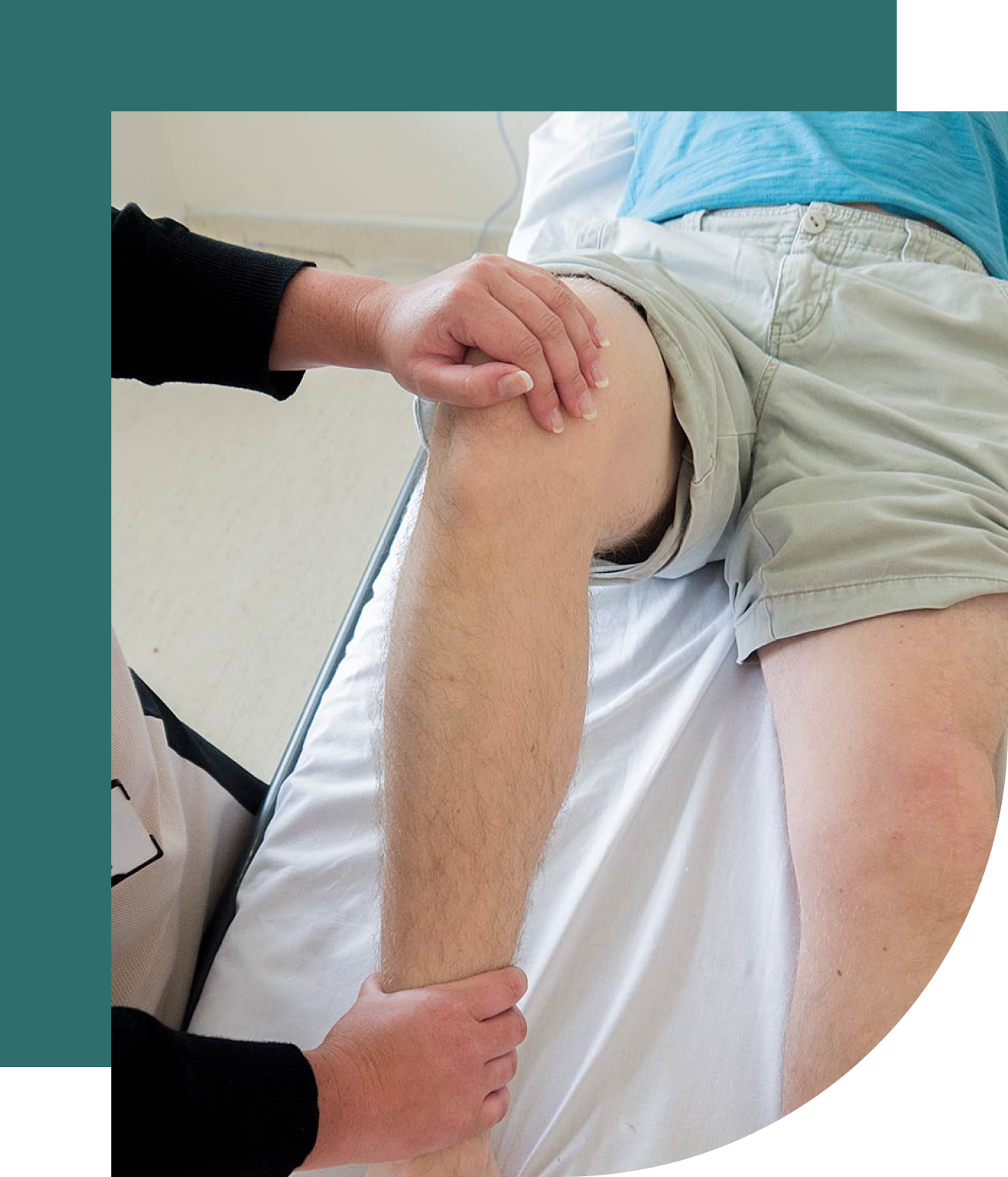
    Popliteal – ask the patient to flex their knee to roughly 60º keeping their foot on the bed, place both hands on the front of the knee and place your fingers in the popliteal space.

    Posterior tibial – felt posterior to the medial malleolus of the tibia.

    Dorsalis pedis – feel on the dorsum of the foot, lateral to the extensor tendon of the great toe.

    You should feel these on both sides and comment on their strength, comparing one side relative to the other.

  8. Another maneuvre which should be performed on the pulses is checking for radio-femoral delay. Palpate both the radial and femoral pulses on one side of the body. The pulsation should occur at the same time. Any delay may suggest coarctation of the aorta.

  9. There is little to auscultate in a peripheral vascular examination. However, you should listen for femoral and abdominal aortic bruits.

  10. As with all stations, you should finish by thanking the patient and ensuring they are comfortable and well covered.